8-day private tour

8-Day Sri Lanka Wildlife Tour

One island, five wild worlds — elephant herds at Minneriya and Udawalawe, Yala's leopards, whale season off Mirissa and the endemic birds of Sinharaja.

Duration
8 days
Route
Udawalawe · Yala · Mirissa
Best for
Wildlife and bird enthusiasts

The journey, in brief

For its size, Sri Lanka may be the best wildlife destination in Asia: two celebrated safari parks, a rainforest humming with birds found nowhere else on earth, wetlands thick with waterbirds, and a continental shelf close enough to shore that the largest animal that has ever lived swims within sight of the beach. Eight days is enough to meet all of it, guided by your own driver and a network of park trackers and naturalists.

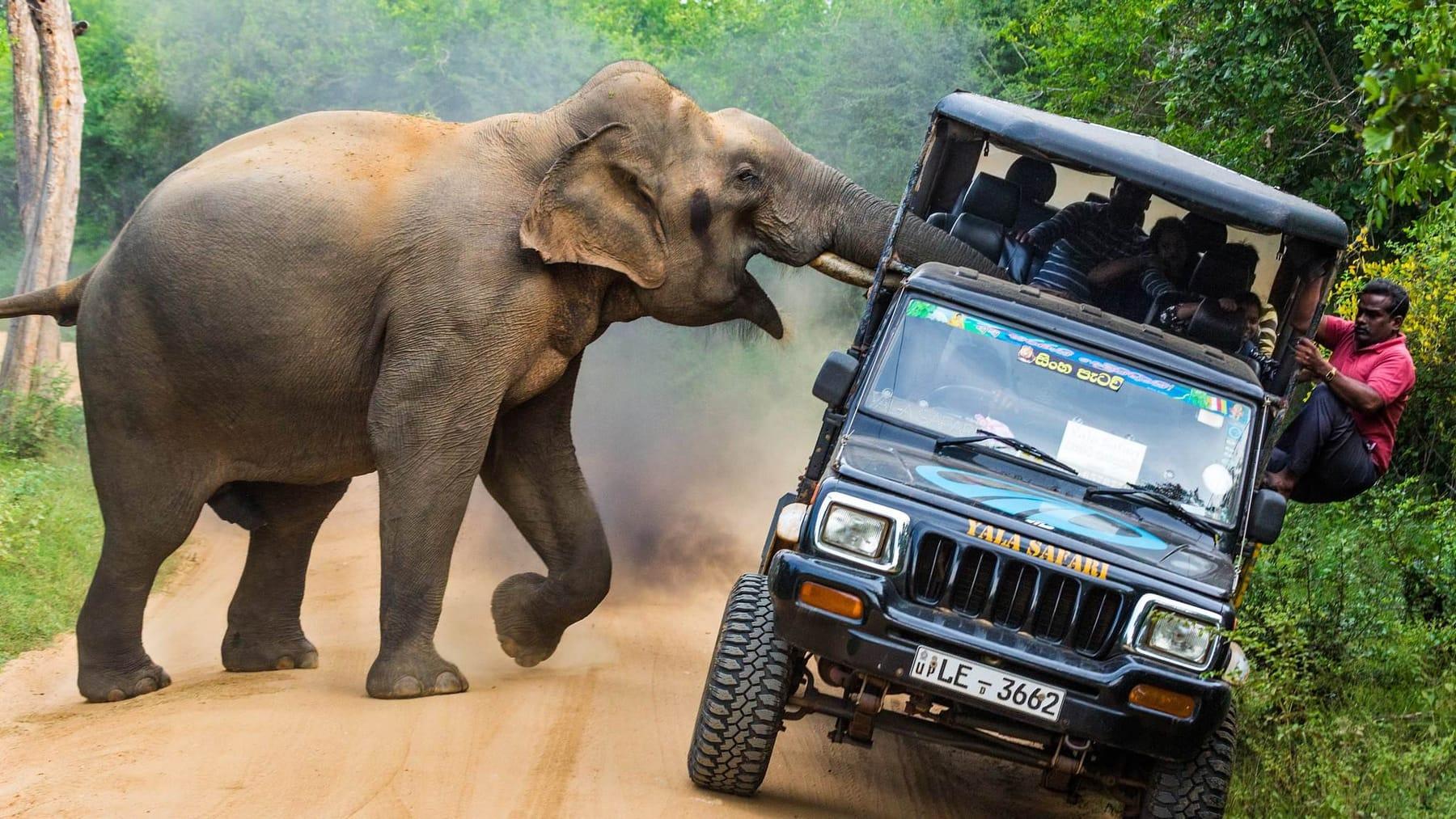
Our position on wildlife is simple, and it is not for sale: observe, never ride. No elephant riding, no washing, no feeding, no baiting — and safari and boat operators chosen for keeping honest distances and staying on the tracks. Wild animals owe us nothing; leopards are possible and sightings are never guaranteed, which is precisely why a morning in Yala feels like what it is — a genuine search rather than a performance.

It suits birders, photographers, families with wildlife-mad children and anyone whose holidays are planned around field guides. The itinerary below is an illustrative itinerary — every journey is tailored — and the seasonal notes matter here more than anywhere: the great elephant gathering at Minneriya peaks around June to September, and Mirissa's whale season runs roughly November to April.

Wildlife and bird enthusiastsPhotographers with long lensesFamilies of animal loversTravellers who like early starts

The route

Where this journey goes

An island-long loop that keeps driving days sensible — with time to wander off the line whenever something catches your eye.

  1. Udawalawe— Sabaragamuwa
  2. Yala— South Coast
  3. Mirissa— South Coast
SRI LANKAIndian OceanNAirport (CMB)HabaranaYalaUdawalaweMirissa
Illustrative route — final journeys are tailored to you.

Day by day

A pace you can actually enjoy

An illustrative itinerary — every day can be lengthened, shortened or swapped when we plan your journey together.

  1. Airport → Habarana

    Bandaranaike Airport to Habarana

    Approximately 3.5–4.5 hours driving today, depending on traffic and road conditions

    Your driver meets you at arrivals and heads north into the Cultural Triangle's dry zone, reaching Habarana — the comfortable base for Minneriya and Kaudulla's elephants — by the afternoon. The village sits among tanks, the ancient reservoirs that make this landscape both farmland and wildlife country; the herons and egrets thickening over the water at dusk are your first field notes.

    Check in, cool off, and go over the week with your driver: which parks on which days, what the season is doing, and what to carry on every game drive — water, a hat, neutral colours, binoculars and a head full of patience. An early night; the elephants start early.

    • Arrival into Sri Lanka's dry-zone tank country
    • Dusk birdlife over the Habarana tank
    • A route briefing with your driver-guide

    Overnight: Habarana or Sigiriya
  2. Elephants at Minneriya or Kaudulla

    Habarana to Minneriya or Kaudulla National Park

    Minimal driving — approximately 1 hour in total, depending on traffic and road conditions, plus the safari jeep circuit

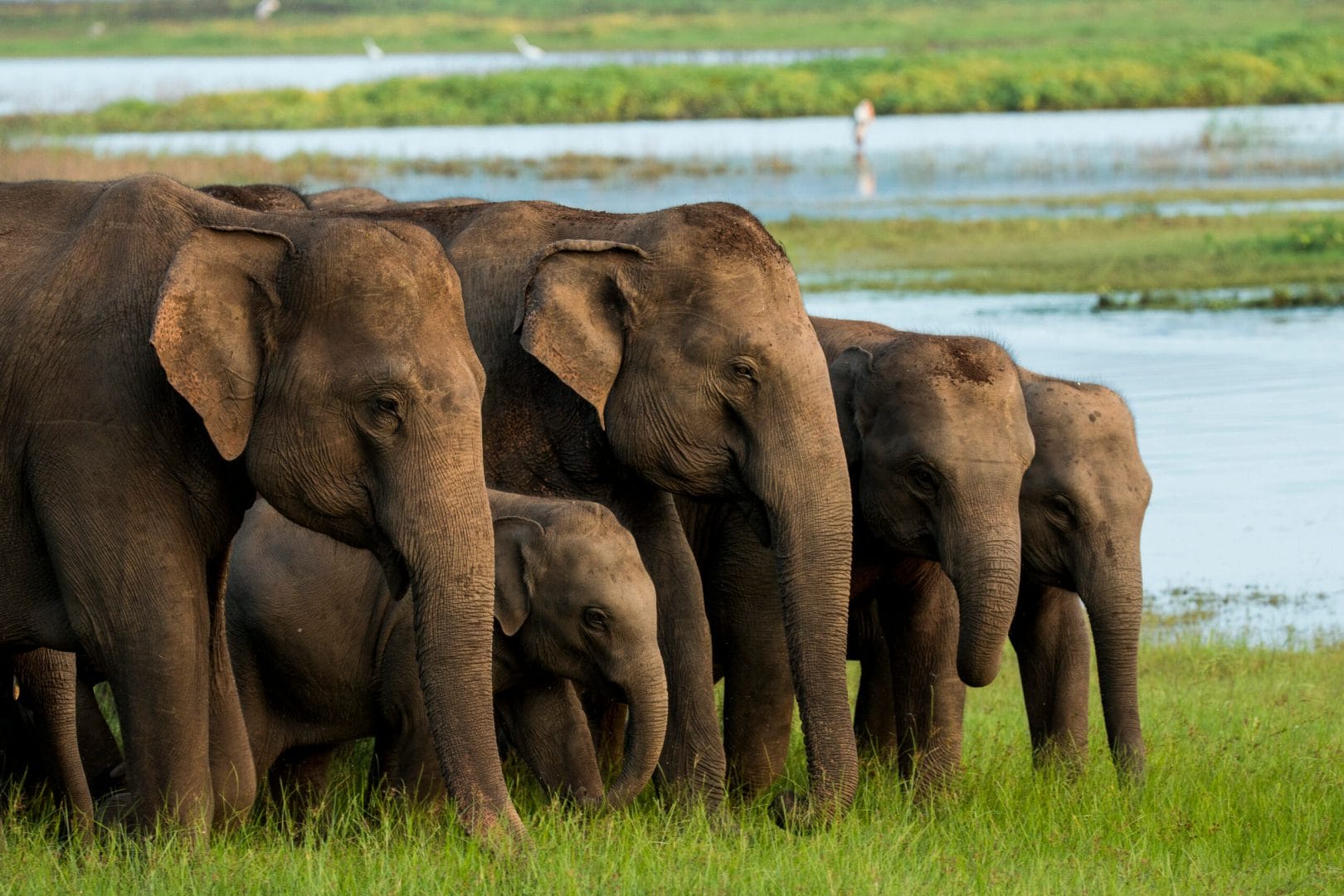
    A game drive in elephant country. Minneriya and Kaudulla are neighbouring parks built around great ancient tanks, and your driver picks the one with the better sightings that week — the herds move between them with the water. In the dry season, roughly June to September, the receding tank at Minneriya draws one of Asia's great gatherings, with hundreds of elephants — matriarchal families, bachelor gangs, wobbly newborns — converging on the grass and shallows.

    The rest of the year the numbers are smaller but the encounters remain frequent; elephants are never guaranteed, though these parks come about as close as wild elephants get. The jeeps keep respectful distances and the afternoons, when the light softens and the herds come down to drink, are the classic circuit. Mornings work too, and your driver will match the drive to your body clock.

    • Wild elephant herds at Minneriya or Kaudulla
    • The Gathering, at its June-to-September peak
    • Waterbirds, crocodiles and toque macaques around the tank

    Overnight: Habarana or Sigiriya

  3. Habarana → Udawalawe

    Habarana to Udawalawe via the hill roads

    Approximately 4–5 hours driving today, depending on traffic and road conditions

    A travelling day with a purpose: south across the island's waist, over the hills and down into Udawalawe's dry, open country, arriving by the mid-afternoon. The drive is a long one, broken for lunch and the slow pleasure of watching Sri Lanka change climate twice in an afternoon — dry zone to hill country and back again.

    Time the arrival for the Elephant Transit Home, beside the park entrance, where rescued calves — orphaned, injured or separated from their herds — are reared on a strict milk routine and released back into the wild when they are ready. Feeding times are public and viewing is from behind a fence, which is exactly as it should be: the animals stay wild, the funds go back into their care, and it is a world away from anywhere that lets you ride an elephant.

    • Crossing the island's waist, from dry zone to hills and back
    • The Elephant Transit Home's feeding of rescued calves
    • Arrival in Udawalawe's golden, open savannah country

    Overnight: Udawalawe

  4. A Full Day at Udawalawe

    Udawalawe National Park

    Minimal driving — short transfers plus the safari jeep circuits

    Udawalawe is the island's most reliable elephant park — open grassland and scattered trees, closer to an African savannah in feel than anywhere else in Sri Lanka, with herds frequently seen at photographic range alongside water buffalo, sambar, jackals, mongooses and a genuinely excellent tally of raptors and waterbirds. A full morning circuit, with the park's famous residents browsing the grasslands, is the day's core.

    The afternoon splits along energy lines: a second short game drive around the tank, or a rest by the pool with a checklist and a cold drink — Udawalawe's birdlife extends to the hotel gardens, and the barbets and woodpeckers keep the list growing even at siesta. Your driver and the lodge's naturalists will compare notes on where the herds have been.

    • A full morning game drive among Udawalawe's herds
    • Water buffalo, jackals and an excellent raptor list
    • Garden birding by the pool in the afternoon

    Overnight: Udawalawe

  5. Udawalawe → Yala

    Udawalawe to Tissamaharama

    Approximately 1.5–2 hours driving today, depending on traffic and road conditions, plus the safari jeep circuit

    A short run east through rice country to Tissamaharama, the gateway town for Yala, arriving in time for lunch and a siesta in the heat of the day. The great white dagoba above the town's tank is worth a circuit on the way in — and the tank itself is usually good for a first crocodile or a stork or three.

    The afternoon belongs to Yala: the island's most famous park, where scrub jungle, lagoons, rocky outcrops and grassland hold one of the densest leopard populations in the world, alongside elephants, sloth bears, buffalo, spotted deer, mongooses and a ruckus of peacocks. Leopards are possible — this is among the best places on earth to look for them — and sightings are never guaranteed, and any guide who tells you otherwise is selling something. Two drives improve your odds; the light at opening time is the photographer's.

    • Tissamaharama's lakeside dagoba
    • An afternoon game drive in Yala National Park
    • Leopards and sloth bears — with honest expectations

    Overnight: Tissamaharama or the Yala gate area

  6. Dawn in Yala → Mirissa

    Yala to Mirissa via the south coast

    Approximately 2.5–3.5 hours driving today, depending on traffic and road conditions

    Keen watchers rise for a second dawn drive — the park at first light, mist on the waterholes, is the Yala that people remember — while the rest enjoy a lie-in and a late breakfast. Birders can substitute Bundala instead: the neighbouring wetland park, a Ramsar site of lagoons and saltpans that in the right season shimmers with flamingos and thousands of waders.

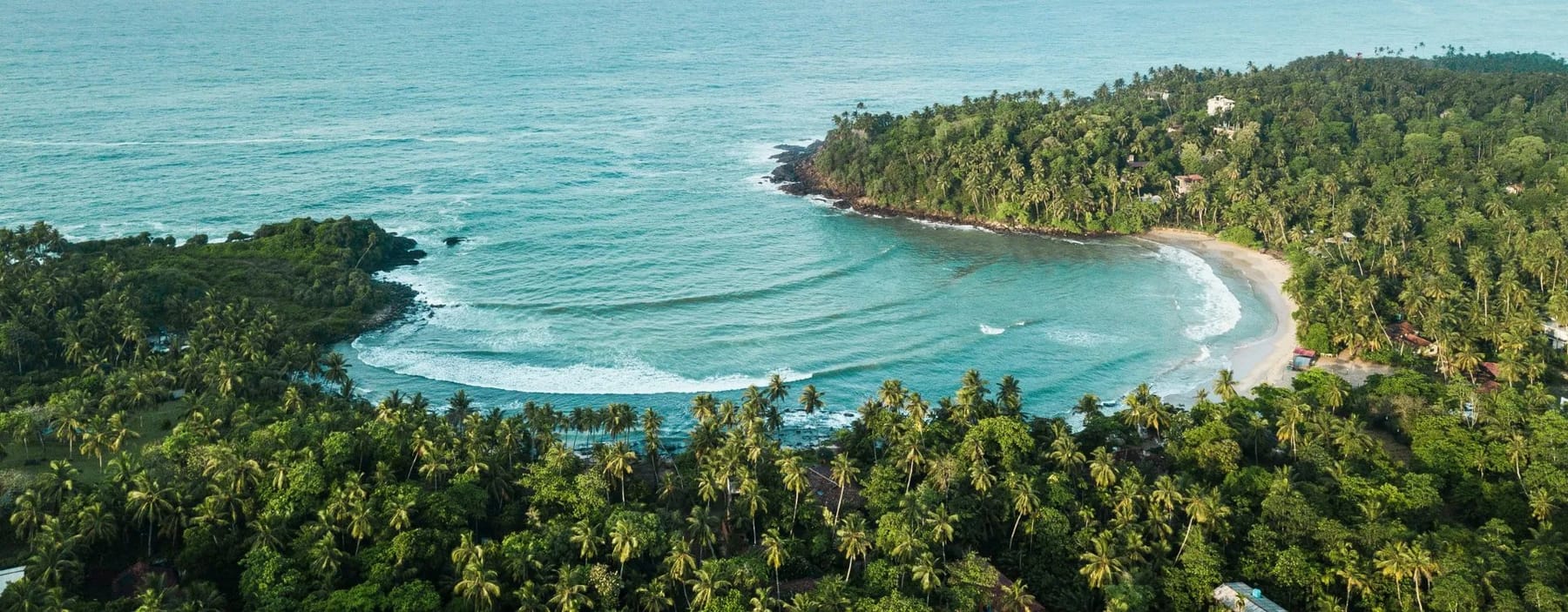
    Either way, the afternoon carries you west along the south coast road to Mirissa — fishing towns, drying nets and coconut palms all the way — arriving in time for a swim and a seafood dinner on the sand. The whale boats leave at dawn, and only in season, so tonight wants an early night.

    • Optional second dawn safari in Yala
    • Or Bundala's Ramsar lagoons for flamingos and waders
    • Sunset arrival on Mirissa beach

    Overnight: Mirissa

  7. Whales at Dawn → Sinharaja

    Mirissa to the Sinharaja forest edge via Deniyaya

    Approximately 2.5–3.5 hours driving today, depending on traffic and road conditions

    Between November and April, the boats leave Mirissa before sunrise for the deep water off the continental shelf, where blue whales — the largest animals that have ever lived — pass within sight of land. Sperm whales and spinner dolphins are the supporting cast. We use operators who respect approach distances and carry sensible passenger loads, and we say plainly: sightings are never guaranteed, because that is the honest way to talk about wild animals.

    Back on land by late morning, dry off, eat, and then turn inland through the lowland hills to the Sinharaja forest edge, reaching your lodge by the afternoon. The evening is for slowing down: a forest-edge garden at dusk, with the strange, lovely calls of the rainforest beginning up-slope, is the finest nature documentary you will ever watch from a chair.

    • Dawn whale watching off Mirissa, in season (November to April)
    • The drive inland to the rainforest's edge
    • Dusk calls and fireflies at a forest-edge lodge

    Overnight: Sinharaja forest edge (Deniyaya side)

  8. Sinharaja Rainforest → Airport

    Guided Sinharaja walk, then to Bandaranaike Airport

    Approximately 3–4 hours driving today after the walk, depending on traffic and road conditions

    Sinharaja is Sri Lanka's last substantial primary rainforest, a UNESCO-listed reserve where roughly half the island's endemic birds and much of its endemic flora live, and the classic experience is the mixed-species flock: a moving company of orange-billed babblers, ash-headed laughingthrushes and — with luck — a Sri Lanka blue magpie or a red-faced malkoha working the canopy together. A local guide walks you in on wide, forest trails; bring leech socks, available locally, and walk slowly.

    After the walk and a late lunch, the road carries you back west and north to the airport — a drive of roughly three to four hours depending on traffic and road conditions, timed by your driver to your evening flight. The checklist will be longer than when you landed; the boots will need a wash; and the leech socks, arguably, are the best few rupees you will have spent all week.

    • A guided rainforest walk among Sinharaja's endemic flocks
    • Sri Lanka blue magpies and red-faced malkohas, with luck
    • A well-timed transfer to the airport for an evening flight

    Overnight: Departure — evening flight, or a final night near the airport

The practical parts

What's included, where you stay, how we adapt

Typically included

  • A private, air-conditioned vehicle and an experienced English-speaking driver-guide dedicated to your party for the whole journey — included in your quotation.
  • All fuel, tolls, expressway charges and parking fees throughout the trip.
  • Your driver's accommodation and meals for the duration of the tour.
  • Airport arrival pickup with flight tracking, and a drop-off timed to your flight.
  • Chilled bottled water in the vehicle every day — safari mornings are thirsty work — plus help arranging park jeeps, trackers and local guides as you travel.
  • Honest boundaries: park entrance fees, jeep hire, whale boats, accommodation and meals sit outside the day rate — we can assist with all of them, always clearly itemised.

Your quotation lists the exact inclusions for your journey.

Accommodation

We suggest a comfortable base around Habarana for the Minneriya nights, with gardens that double as bird habitat; simple, well-run safari lodges within reach of Udawalawe's gate, where early breakfasts and packed picnics are standard practice; a guesthouse or lodge around Tissamaharama for the Yala dawns; an easy beach hotel in Mirissa close to the harbour for the whale boats; and a forest-edge eco-lodge at Sinharaja, where the point is the dawn chorus on your doorstep. Book directly, or share your budget and priorities and we will shortlist and reserve on your behalf.

Making it yours

Wildlife itineraries live and die by season, so this template comes with moving parts. In the June-to-September gathering season we can weight the trip towards Minneriya with two tank mornings; birders may want a full day at Bundala or an extra Sinharaja dawn; photographers chasing leopards can add a third Yala drive; and outside the November-to-April whale season we would usually trade the Mirissa dawn for turtle season on the beach or an extra night under the rainforest canopy. Keen hikers can even extend towards the cloud forests of Horton Plains for the highland endemics. Tell us your species list and your months, and we will draw the route around it.

Request changes

Questions

About the 8-day tour

Anything unanswered? Message us on WhatsApp — or email booking@lankachauffeur.com.

Keep exploring

Journeys that pair well

Begin your journey

Ready to make the 8-day journey yours?

Tell us your dates and what you'd change — we'll send a tailored itinerary and a transparent quotation, usually within 24 hours.